

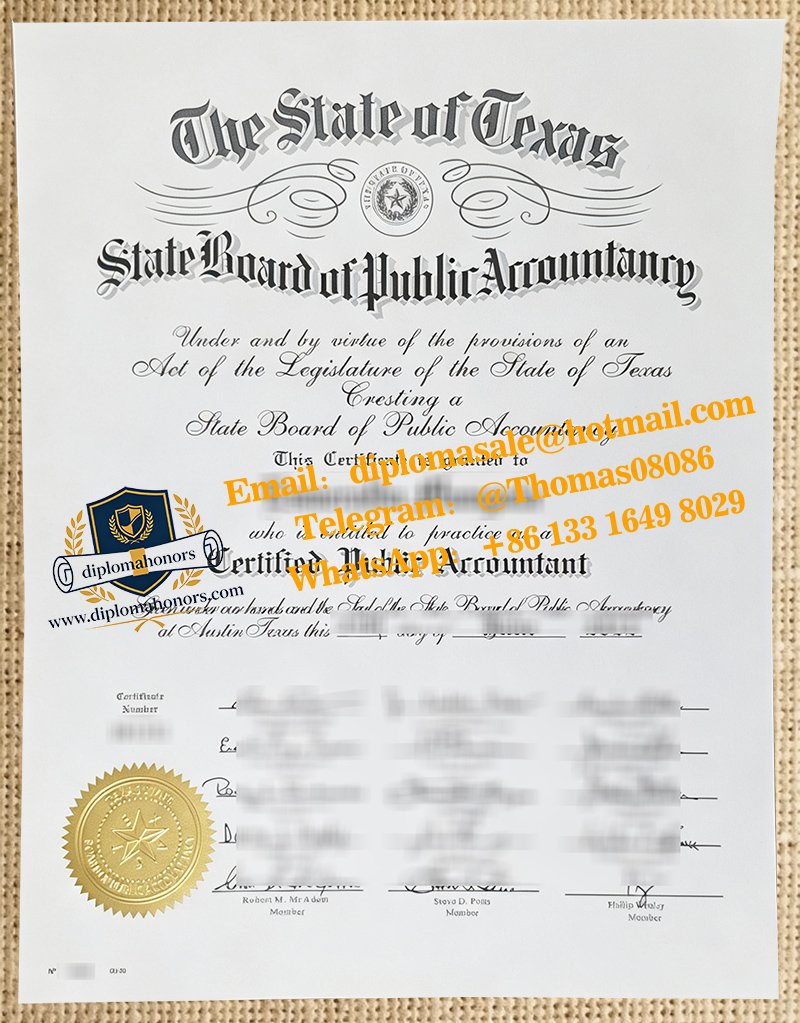
A Texas CPA certificate is the official, state-endorsed credential that authorizes accounting professionals to practice public accountancy in Texas. Regulated by the Texas State Board of Public Accountancy (TSBPA), this certification sets the legal and professional standard for auditing, tax preparation, financial reporting, and business consulting across the state. For accounting graduates and finance practitioners, earning a Texas CPA certificate is the most reliable way to boost professional credibility, unlock high-level job roles, and secure long-term career growth in Texas’s robust business economy.
The 2026 eligibility rules for a Texas CPA certificate feature updated and flexible education pathways tailored for different candidates. To sit for the Uniform CPA Exam, applicants must hold an accredited bachelor’s degree and complete 120 semester credit hours, including 21 hours of upper-level accounting courses and 24 hours of advanced business coursework. Starting August 1, 2026, the upper-level accounting credit requirement will increase to 24 hours, aligning Texas standards with national accounting education benchmarks.
For full Texas CPA certificate licensure, all candidates must meet the mandatory 150-semester-credit rule, a universal standard for professional accounting licensing. Alternatively, Texas offers a flexible pathway: applicants with 120 credits can qualify by completing additional supervised work experience. This unique policy makes Texas more accessible for early-career accounting professionals while maintaining strict industry competence standards.
Texas CPA Certificate: 2026 Requirements, Exam Rules and Career Benefits
Passing the Uniform CPA Examination is a core milestone for all Texas CPA license applicants. The four-part exam covers auditing, financial accounting, regulation, and business concepts, testing both theoretical knowledge and practical skills. Unlike other states, Texas also requires candidates to complete a board-approved ethics course and pass a professional conduct exam after passing the CPA test. This ethics requirement ensures all certified professionals adhere to strict state accounting laws and ethical guidelines.
Professional work experience is another key licensing component. Texas CPA candidates need one year of verified supervised experience, equivalent to 2,000 working hours, under an active licensed CPA. The experience can include public accounting, corporate finance, governmental accounting, or tax services, covering real-world audit, financial analysis, and tax compliance tasks. This practical training bridges academic learning and professional practice for new certificate holders.
Possessing a Texas CPA license delivers outstanding career and professional advantages. Texas hosts countless corporate headquarters, public accounting firms, and financial institutions, all of which prioritize CPA holders for senior accounting, tax management, and audit leadership roles. Certified professionals enjoy higher average salaries, stronger job stability, and better promotion opportunities compared to uncertified accounting staff.
To maintain active certification, Texas CPAs must complete 120 hours of continuing professional education (CPE) every three years under the state’s rolling CPE cycle. This ongoing education requirement ensures practitioners stay updated on evolving tax codes, financial regulations, and accounting best practices. Additionally, the Texas CPA certificate holds solid reciprocity with other U.S. states, supporting nationwide career mobility.
In short, the Texas CPA certificate is a vital, future-proof credential for anyone building a professional accounting career in Texas. With flexible 2026 licensing pathways, rigorous ethical standards, and exceptional career value, it remains the gold-standard qualification for finance professionals seeking industry authority and long-term professional success.