

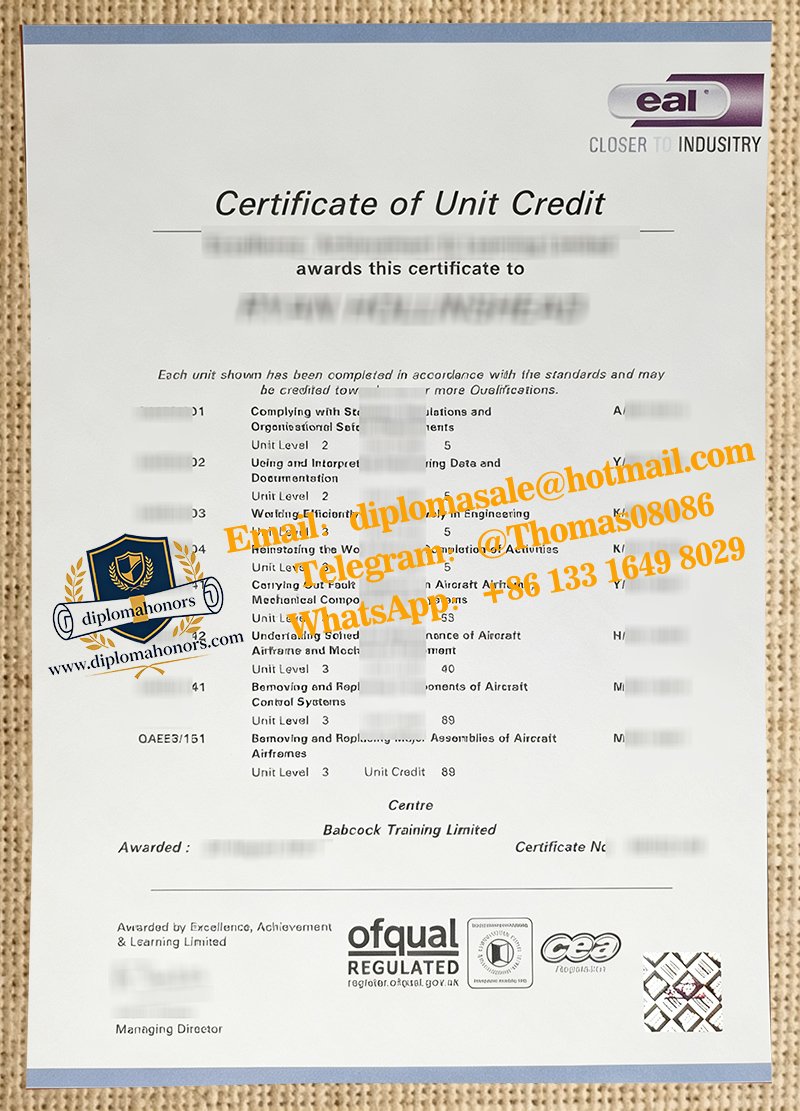
In the competitive landscape of vocational education and employment, the EAL transcript stands as a critical document that validates practical skills, theoretical knowledge, and professional competence. Designed for learners pursuing careers in engineering, manufacturing, and related technical fields, this credential and its accompanying transcript are more than just paperwork—they are gateways to career advancement, further study, and global recognition. Below, we explore why this document matters, what it includes, and how it benefits learners and employers alike.
What Is an EAL transcript?
The EAL Level 3 Diploma is a nationally recognized vocational qualification in the UK, tailored to equip learners with industry-specific skills for technical roles. The transcript, paired with the certificate, is an official record that details every unit completed, grades achieved, and competencies demonstrated throughout the course. Unlike the certificate alone, the transcript offers a granular breakdown of a learner’s performance, highlighting strengths in areas such as mechanical engineering, electrical systems, or manufacturing processes. This level of detail makes it a trusted reference for employers assessing a candidate’s suitability for technical roles.
Core Components of the Transcript
A valid EAL transcript includes essential information to ensure authenticity and clarity. Key elements include the learner’s full name, unique candidate ID, course start and end dates, and the awarding body (EAL). It lists all mandatory and optional units, each with a unit code, credit value, and grade (typically pass, merit, or distinction). Additionally, it features the signature of an authorized EAL representative and the official EAL stamp, preventing fraud and confirming the document’s legitimacy. For international learners, some transcripts also include a translation or equivalency note for global use.
Why the Document Is Essential for Career Growth
For job seekers, the EAL transcript is a powerful tool to showcase expertise to employers. Technical industries prioritize practical skills, and the transcript’s detailed unit breakdown proves a candidate’s ability to apply knowledge in real-world scenarios. Many engineering and manufacturing roles require this qualification as a minimum entry requirement, and a strong transcript (with merits or distinctions) can set candidates apart from competitors. For those pursuing further education, the transcript is also required for enrollment in Level 4 qualifications or university courses related to engineering and technology.
Tips for Securing and Using Your Transcript
To obtain your transcript, ensure all course units are completed and assessed by your training provider, who will submit results to EAL for verification. Once issued, keep the original document in a safe place and request digital copies for easy sharing with employers or educational institutions. When applying for jobs, highlight key units on your CV that align with the role’s requirements, and reference the transcript to back up your claims. For international use, check if the transcript needs official authentication to meet the standards of your target country.
In summary, the EAL Level 3 Diploma certificate transcript is a vital asset for anyone in technical vocational fields. It validates skills, enhances employability, and opens doors to further learning. By understanding its value and using it effectively, learners can turn this document into a catalyst for long-term career success.