

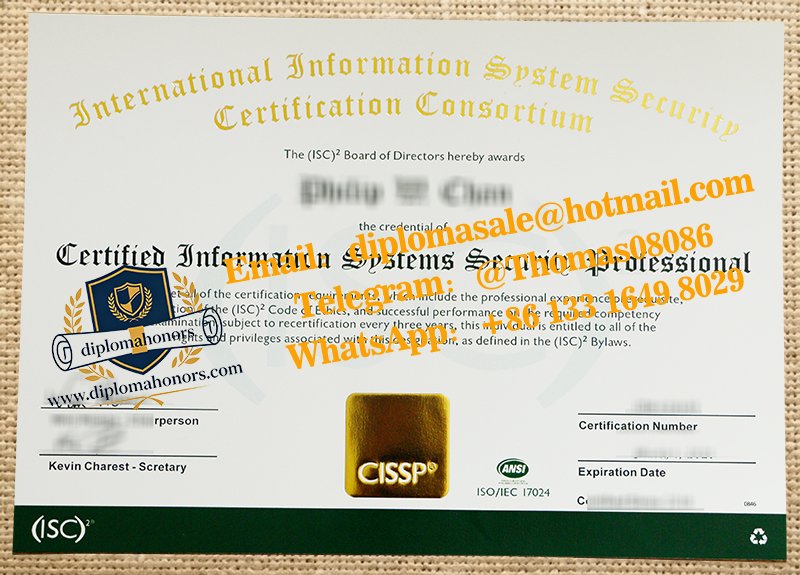
The CISSP Certificate, short for Certified Information Systems Security Professional, is the most globally recognized senior-level cybersecurity credential issued by (ISC)². Widely regarded as the industry gold standard, this certification validates comprehensive security knowledge, professional expertise and strategic cybersecurity capabilities. For IT security practitioners aiming to advance into senior and leadership roles, obtaining the CISSP Certificate is an essential milestone to boost industry credibility and long-term career development.
What Is a CISSP Certificate?
The CISSP Certificate is a vendor-neutral, advanced cybersecurity qualification designed for experienced security professionals. Unlike entry-level technical certifications that focus on operational skills, CISSP covers a full spectrum of cybersecurity governance, risk management, architecture design and security operations. It proves that holders possess end-to-end knowledge to protect enterprise IT infrastructures, data assets and business systems from modern cyber threats.
Its comprehensive curriculum spans eight critical security domains, including security and risk management, asset security, security architecture, network security, identity management, security assessment, software development security and incident response. Covering both technical and managerial dimensions, CISSP aligns with global security standards and adapts to evolving cyber risks, making it authoritative across all industry sectors.
Official CISSP Certificate Requirements
To earn the official CISSP Certificate, candidates must meet strict (ISC)² criteria covering exam proficiency and professional experience. First, applicants need to pass the challenging CISSP examination, which evaluates systematic cybersecurity knowledge, practical problem-solving and strategic decision-making abilities for enterprise security scenarios.
Second, candidates require a minimum of five years of cumulative paid work experience in at least two of the eight CISSP security domains. For professionals with relevant four-year college degrees or advanced certifications, one year of experience can be waived. This balanced requirement ensures all CISSP holders combine solid theoretical foundations with real-world industry experience.
Key Career Benefits of CISSP Certificate
The CISSP Certificate delivers unparalleled professional advantages in the competitive cybersecurity industry. Firstly, it unlocks elite career opportunities. It is a mandatory or preferred qualification for senior roles such as Cybersecurity Architect, Senior Security Analyst, IT Security Manager, Chief Information Security Officer and Security Consultant across global enterprises.
Secondly, it significantly elevates salary potential and professional authority. As a top-tier industry credential, CISSP is widely trusted by enterprises, governments and financial institutions. Holders are capable of designing robust security frameworks, mitigating complex cyber risks and ensuring full regulatory compliance, becoming core strategic assets for organizations.
Thirdly, it offers sustainable career competitiveness. With rising global data security demands and increasingly sophisticated cyber attacks, the comprehensive skill set of CISSP holders remains highly relevant and future-proof, supporting continuous career growth in the long run.
Conclusion
Overall, the CISSP Certificate is a flagship cybersecurity certification for seasoned professionals pursuing senior technical and leadership positions. It integrates comprehensive technical expertise and strategic security governance, setting the highest benchmark for industry professionalism. For anyone committed to building a prestigious, high-growth career in global cybersecurity, investing in the CISSP Certificate is a wise and high-return professional choice.