

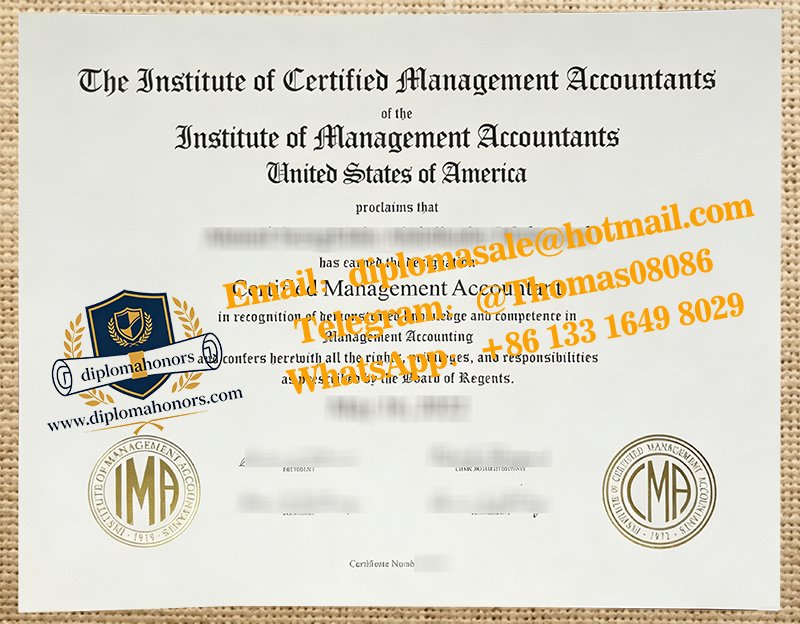
The CMA Certificate, or Certified Management Accountant, is a globally respected professional accounting credential. It is awarded by the Institute of Management Accountants (IMA), a leading global body for finance and business professionals. Unlike general accounting certifications, the CMA certificate focuses specifically on management accounting, corporate finance and business strategy. It is the ideal qualification for finance professionals aiming to move beyond basic bookkeeping into strategic business roles.
What Is a CMA Certificate?
The CMA certificate is a specialized finance qualification built for modern corporate environments. It concentrates on strategic management accounting, financial analysis, risk management and business decision-making. It differs from traditional accounting certificates that only cover financial reporting and compliance tasks.
CMA training covers two core exam parts. The first part focuses on financial planning, performance and analytics. The second part covers strategic financial management and corporate strategy. The content is highly practical and business-oriented. It equips holders with skills to analyze financial data, optimize business costs and support company growth strategies.
CMA Certificate Entry & Exam Requirements
The CMA certificate has clear and accessible entry standards. All candidates must hold a bachelor’s degree from an accredited institution. Relevant professional accounting or finance experience can also qualify applicants under IMA’s flexible entry policy.
Candidates need to pass two comprehensive exam sections. The exams test real-world financial skills rather than theoretical knowledge only. After passing the exams, applicants must complete two years of continuous professional experience in management accounting or corporate finance. This ensures all CMA holders possess both theoretical knowledge and practical workplace competence.
Key Professional Benefits of a CMA Certificate
Obtaining the CMA Certificate delivers outstanding career advantages for finance professionals. Firstly, it greatly improves employability in corporate finance roles. Multinational companies, manufacturing firms and financial institutions actively recruit CMA holders for finance analyst, management accountant and finance manager positions.
Secondly, the CMA certificate significantly increases salary potential. CMA-certified professionals typically earn higher salaries than non-certified accounting staff. Their ability to drive financial strategy, cost control and business improvement makes them valuable core team members for growing enterprises.
Conclusion
Overall, the CMA Certificate is a high-value, globally recognized qualification for modern finance professionals. It bridges the gap between basic accounting work and strategic financial management. For anyone pursuing a long-term career in corporate finance, business analysis and financial leadership, the CMA certificate is a reliable and future-proof professional investment.