

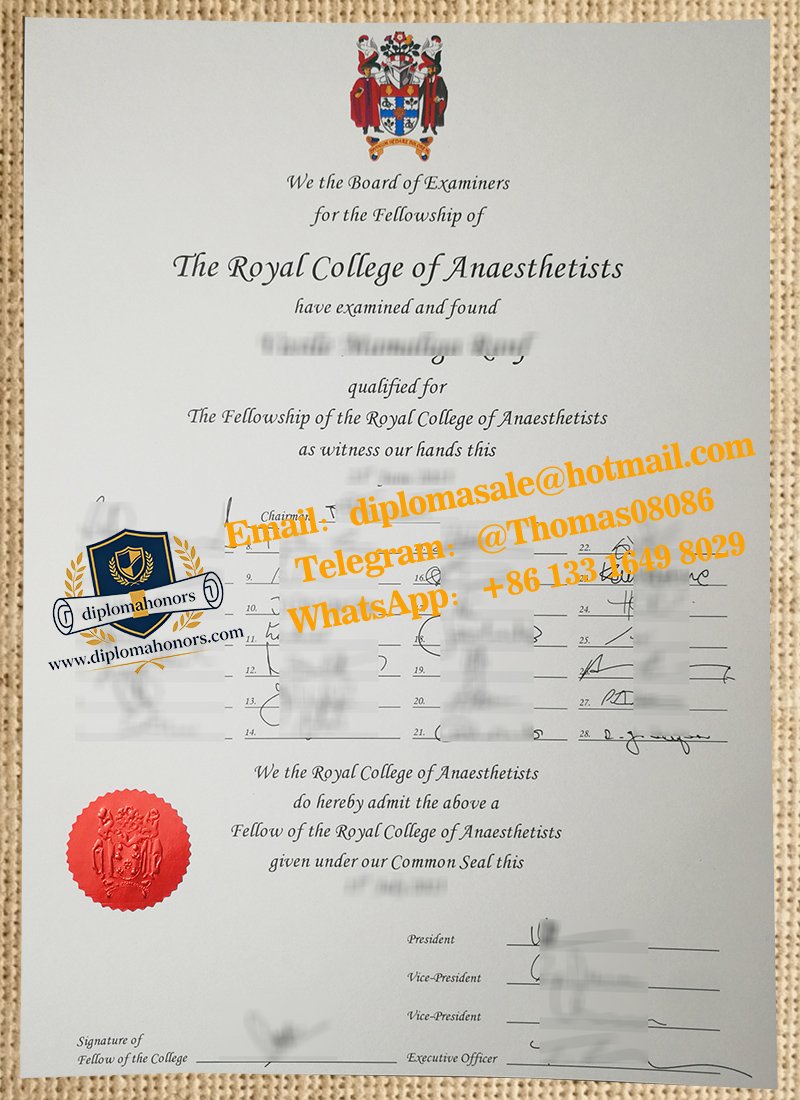
For medical professionals pursuing a career in anaesthesia, the FRCA certificate (Fellowship of the Royal College of Anaesthetists) is the most prestigious and essential credential in the UK and beyond. Awarded by the Royal College of Anaesthetists (RCoA), this certification validates advanced expertise in perioperative care, pain management, and critical care, serving as a benchmark for excellence in the field. Whether you’re a trainee anaesthetist or a medical professional looking to specialize, the FRCA certificate is the key to unlocking senior clinical roles and global recognition.
To qualify for the FRCA certificate, candidates must meet strict entry requirements set by the RCoA. First, you must hold a valid medical degree (MBBS or equivalent) and be registered with the General Medical Council (GMC) in the UK. Additionally, you need to complete the Core Training (CT) in anaesthesia, a two-year program that builds foundational skills in anaesthetic practice, critical care, and pain management. Trainees must also gain hands-on clinical experience in NHS hospitals, working alongside senior anaesthetists to apply theoretical knowledge in real-world settings.
FRCA Certificate: The Gold Standard for Anaesthetic Practice in the UK
The FRCA certificate program is structured into three challenging parts, designed to test both theoretical knowledge and practical competence. Part 1 focuses on basic sciences relevant to anaesthesia, including physiology, pharmacology, and physics, assessed via multiple-choice and short-answer exams. Part 2 is split into two sections: a written exam covering clinical anaesthesia and critical care, and an Objective Structured Clinical Examination (OSCE) testing practical skills like airway management and patient assessment. Part 3, the Final FRCA, is a workplace-based assessment that evaluates clinical practice over 12 months of Higher Specialist Training (HST).
Earning the FRCA certificate is a career-defining achievement for anaesthetists. It is a mandatory credential for becoming a consultant anaesthetist in the UK NHS, as well as for practicing in many European countries and commonwealth nations. Certified fellows gain access to exclusive RCoA resources, including continuing professional development (CPD) opportunities, research grants, and networking events with leading anaesthetic experts. The certificate also enhances professional credibility, positioning holders as trusted specialists in perioperative care and critical medicine.
Maintaining the FRCA certificate requires a commitment to lifelong learning. Fellows must complete 250 hours of CPD every five years, covering the latest advancements in anaesthetic techniques, patient safety protocols, and critical care research. The RCoA supports this by offering tailored courses, online learning modules, and clinical guidelines, ensuring FRCA holders stay at the cutting edge of their specialty and deliver the highest standard of patient care.
In conclusion, the FRCA certificate is more than a qualification—it’s a mark of mastery in anaesthetic practice. With its rigorous assessment structure, global recognition, and focus on continuous professional growth, it empowers medical professionals to excel in their careers and improve patient outcomes. If you’re dedicated to pursuing a career in anaesthesia, the FRCA certificate is an investment that will shape your professional journey and solidify your place as a leader in the field.