

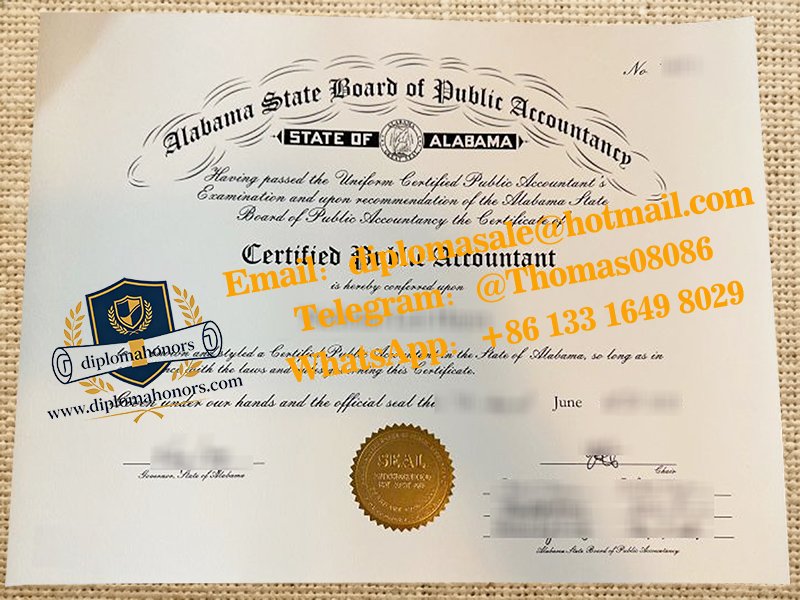
An Alabama CPA certificate is a prestigious professional credential issued by the Alabama State Board of Public Accountancy, authorizing qualified accounting professionals to practice public accounting legally within the state. Recognized nationwide and globally, this certification stands as the gold standard for accounting expertise, credibility, and ethical compliance for finance practitioners working in Alabama’s corporate, governmental, and public accounting sectors. For aspiring accountants, obtaining an Alabama CPA certificate is the most effective way to boost career competitiveness, unlock high-level job opportunities, and gain industry-wide professional recognition.
To earn an official Alabama CPA certificate, candidates must complete three core eligibility criteria known as the “Three Es”: education, examination, and professional experience, with updated regulatory pathways effective in 2026. First, the educational requirement mandates a bachelor’s degree from a regionally accredited institution, paired with 150 semester hours of postsecondary coursework. The curriculum must include specialized accounting credits and 27 semester hours of core business courses covering finance, business law, economics, and business ethics to meet state board standards. Notably, Alabama’s new Pathways to CPA Act offers a flexible alternative, allowing qualified candidates with a bachelor’s degree and two years of verified accounting experience to pursue licensure without completing the full 150 credit hours.
Alabama CPA Certificate: Requirements, Benefits and Application Guide
The second critical step is passing the Uniform CPA Examination. Candidates must clear all four exam sections, including Auditing, Financial Reporting, Regulation, and a discipline-specific module, with a minimum score of 75 within an 18-month rolling window. After passing the exam, applicants need to fulfill professional experience requirements: one year of full-time supervised public accounting work or two years of eligible accounting experience in corporate, government, or academic settings under a licensed CPA’s supervision. A passing score on the AICPA Professional Ethics Exam is also mandatory for final certification approval.
Holding an Alabama CPA certificate delivers substantial professional and financial benefits. Unlike uncertified accounting staff, CPA holders are legally qualified to conduct audits, prepare audited financial statements, and provide tax advisory services for enterprises and public institutions. This credential opens doors to high-end roles such as senior auditor, corporate finance manager, tax consultant, and public accounting partner, with significantly higher salary ceilings than non-certified accounting positions. Additionally, the certificate features cross-state recognition, enabling professionals to pursue career mobility across the United States with streamlined license reciprocity procedures.
Maintaining an Alabama CPA certificate requires ongoing compliance with state regulations. Licensed CPAs must complete 40 hours of Continuing Professional Education (CPE) annually, including two hours of mandatory ethics training, to retain active certification status. This continuous learning requirement ensures practitioners stay updated on evolving accounting standards, tax policies, and industry compliance rules.
In summary, the Alabama CPA certificate is a valuable, industry-recognized credential that validates professional competence, ethical integrity, and practical accounting experience. With flexible eligibility pathways, wide professional applicability, and promising career prospects, it remains an essential certification for anyone building a long-term, high-level career in Alabama’s accounting and finance industry.