

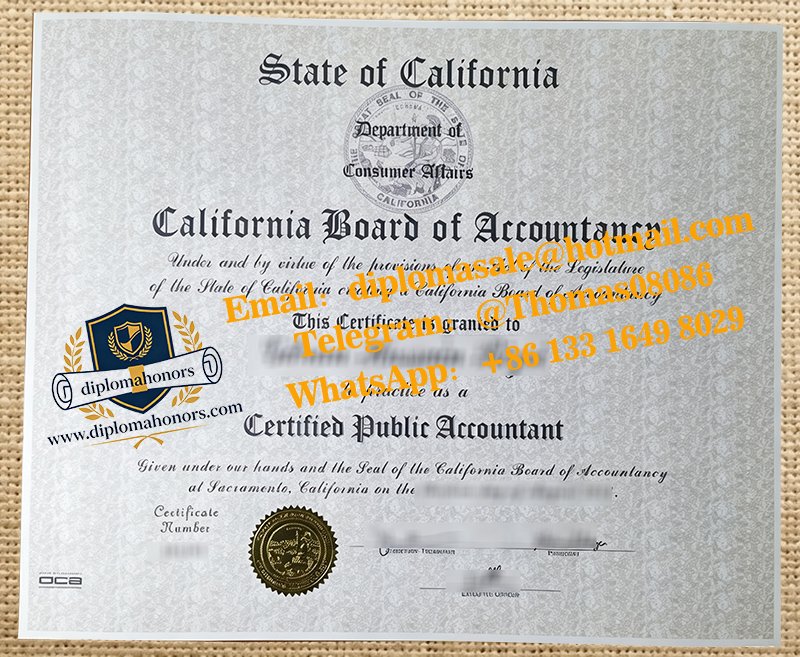
A California CPA certificate is a prestigious state-issued professional license administered by the California Board of Accountancy (CBA). As the highest accounting credential in California, it validates a practitioner’s expertise, ethical standards, and legal qualification to offer public accounting services, including auditing, tax filing, and financial consulting. For accounting professionals working in California’s competitive finance, corporate, and public sectors, holding a California CPA certificate is a critical milestone for career advancement, industry credibility, and long-term professional growth.
Obtaining a California CPA certificate follows structured eligibility standards, with updated rules under the new AB 1175 legislation that streamline traditional requirements for candidates. To qualify for licensure, applicants must meet core education, examination, and experience criteria. Currently, candidates need a regionally accredited bachelor’s degree with 150 semester credit hours, including 24 units of core accounting courses and 24 units of business-related coursework. Starting in 2027, California will launch a flexible alternative pathway, allowing candidates to waive the 150-hour rule with a bachelor’s degree and sufficient professional accounting experience, lowering entry barriers for working professionals.
California CPA Certificate: Requirements, Benefits and Career Value
All applicants must pass the Uniform CPA Examination, consisting of four sections covering auditing, financial accounting, regulation, and business analysis. Candidates must earn a minimum score of 75 on each section within an 18-month testing window. After passing the exam, applicants complete two years of verified professional accounting experience supervised by a licensed California CPA. Eligible work includes corporate accounting, tax preparation, governmental finance, and public audit services, offering broader flexibility than many other U.S. state licensing standards.
The California CPA certificate delivers outstanding professional and financial benefits. Licensed CPAs possess exclusive legal authority to sign audit reports, certify financial statements, and represent clients before tax authorities — privileges unavailable to unlicensed accountants. This credential unlocks high-level career roles such as senior auditor, tax director, corporate finance leader, and public accounting firm partner. California CPA holders also enjoy higher salary potential, stronger job stability, and broader industry respect within the state’s robust tech, finance, and business ecosystem.
License maintenance requires consistent professional development. Active California CPAs must complete mandatory Continuing Professional Education (CPE) hours annually, including ethics training, to stay current with evolving accounting regulations, tax codes, and industry best practices. This ongoing requirement ensures practitioners maintain high professional standards and deliver compliant, reliable financial services.
In conclusion, the California CPA certificate remains the gold-standard credential for accounting professionals in California. With updated flexible licensing pathways, exclusive practice privileges, and powerful career advantages, it serves as an essential investment for anyone pursuing a successful, high-level accounting and finance career in California and across the United States.